
President: Alistair Hugh
Vice President: Robin McAlpine
Immediate Past President: Bill Brown
Raith Probus Secretary: Allan Morton
Contact E Mail : RaithProbusSec@gmail.com
The Club meets on the first and third Tuesday of each month at 10:30am. We meet at Pathhead Parish Church Hall, 33 Harriet Street, Kirkcaldy KY1 2AG.
FUTURE TALKS:
If any club member has had a particularly interesting career or has a hobby and wishes to share by giving a talk, please contact any committee member.
Raith Probus Club
Meeting Number 993
Pathhead Church 1st September 2026
President Alistair Hugh opened the meeting at 10:30hrs.
Introduction to Speaker:
Speaker: Anna Tizzard
Topic: “Highs and lows of a Paralympic Athlete”
Vote of Thanks: Cap Fowles
Previous minutes, matters arising – None.
REPORTS
Membership: Ray Griffiths
Reported the attendance numbers of 41 members present, 5 apologies and 0 guests.
IT: Jim Neilson
Nothing to report.
Recorder: Bob Terras
Some may remember when you had to service your car as things did not seem to be going
OK. They day has now come when such servicing is needed by my computer due to many
recent issues. It was a bad time as Charlie might have called at any time saying all the fees
had been paid which would mean it was up to me to get the final membership lists completed.
Hopefully by the next meeting the final list of members will be ready, if I can locate the
memory stick!
Probus Website: Bob Terras
A few people have submitted photographs which I plan to add to the website. I still
recommend looking at the websites of other local Probus clubs to see what they are up to.
Always looking for ideas about how to improve the website.
Treasurer: Charlie Low
August Bank reconciliation in order. Membership fees to come.
Welfare: Tom Reilly
I paid a visit to Bob Docherty at Marchmont Residential Care Home on Wednesday the 26th
of August. I was accompanied by Bob’s wife Margaret. I found the accommodation warm
and welcoming. The staff were very helpful and the three of us enjoyed tea and biscuits in
Bob’s room. Bob finds it difficult to maintain focus and drifts off to sleep from time to time.
Bob was admitted to Marchmont on Wednesday the 19th of August and due to his medical
condition could remain as a long term resident. Bob is regularly visited by his loving wife
Margaret I am sure we all wish Bob, Margaret and family all the best for the future.
I paid a visit to Bob Mullen at his home on Thursday the 27th of August. Bob was in fine
form, and we chatted away for the best part of an hour about Raith Probus events and
recent football results. Bob has had a long association with Raith Rovers and that’s the first
result he looks for. Bob has missed some recent probus meetings because of his limited
mobility due to a fall earlier this year and complications from a prostate operation some
years ago. Bob depends greatly on his devoted wife Wilma. I am sure we wish Bob, Wilma
and family all the best for the future.
Secretary: Allan Morton
Nothing to report.
Vice-President: Robin McAlpine, 1000th Meeting Sub-Committee (15th Dec)
Nothing to report.
STANDING ORDER REPORTS
Speakers: Charlie Low
All meetings covered to the end of 2026.
Social: Ragnar Ingebrigtsen, Peter Shields
There will not be any tickets available for us for the KAOS performances on Saturday 21st
November, therefore please book tickets by yourself, possibly from ticket returns (available
from 31st August), as we are unable to get a group booking.
Glasgow and Edinburgh have fields of remembrance for the last Saturday in October where
they lay crosses in the gardens so we have decided to be the first branch to do so outside.these cities. We will be holding our own field of remembrance between 11am and 11:30am
on Saturday 24th October. You will be able buy crosses from the Museum and Poppy Scotland
will also attend the event.
Calendar of Events:
Wednesday 23rd
September
Coffee Morning at Weavers, 10am, price £4.50
Friday 25th Sep –
Monday 28th Sep
Coach holiday based in Strathpeffer (One day to Skye, one day to
Inverness). Note the 9.40am pickup time.
Contact Peter Shields
Friday 9th Oct Annual Dinner
Menus now available for payment by 15th September meeting
Contact Ragnar Ingebrigtsen
Wednesday 18th
November
Coffee Morning at Weavers, 10am, price £4.50
Saturday 21st Nov Matinee performance from KAOS of “The Hunchback of Notre
Dame” at 2.30pm – tickets to be bought individually by members
CONVENERS REPORTS
Cycling: John Chalmers (not present)
Nothing to report.
Further information: John Chalmers.
Gardening: Ron Steedman
The president presented Jim Neilson with this year’s trophy for his excellent flower display at
our recent competition.
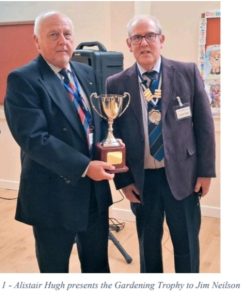
Figure 1 – Alistair Hugh presents the Gardening Trophy to Jim Neilson
Next garden visit will be on Wednesday 9th September at Phil Bate’s garden, 16 Formonthills
Lane, Glenrothes KY6 3EL, UK, 10am
Next meeting will be on Thursday 17th September at Kirkcaldy Golf Club, 10am.
Further information: Ron Steedman.
Golf: Robin McAlpine
Next meeting is on 10th September at Thornton Golf Club where we play the Texas Scramble
for the Brunton Trophy. Tee time is 1pm. This is the last tournament of the year. The trophies
will be engraved and presented at a later date.
Further information: Robin McAlpine.
Lottery: Charlie Low
Collecting stake money for September/October. This has been audited with no issues.
Photography: Allister Todd
Next meeting – Thursday 24th September 10am. Kirkcaldy Golf Club, where we will hold a
competition. Members should send in three photographs the week before which will then be
judged.
Further information: Allister Todd.
Snooker: Malcolm Walker
Nothing to report.
Styx Snooker Club.
Every Friday: 11.00 to 13.00.
Further information: Malcolm Walker.
Walkers: Ken Campbell
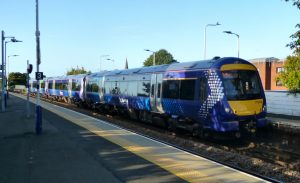
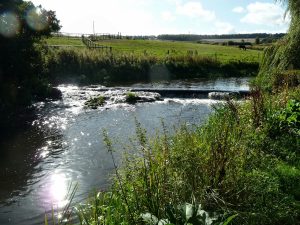
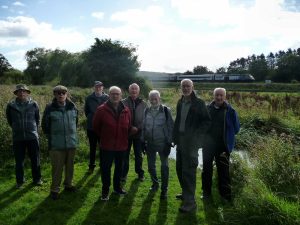
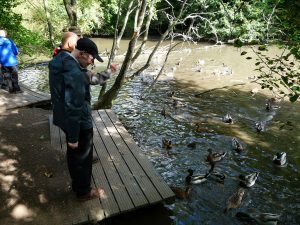
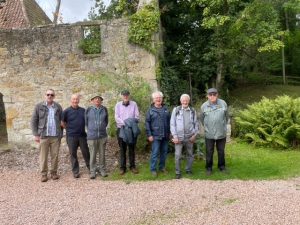
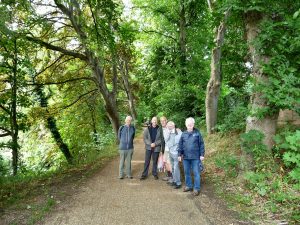
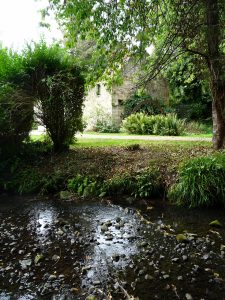
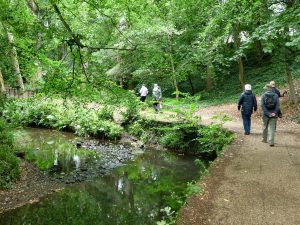
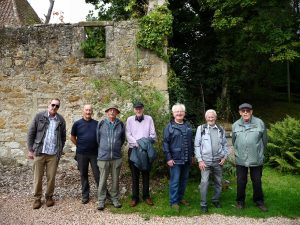
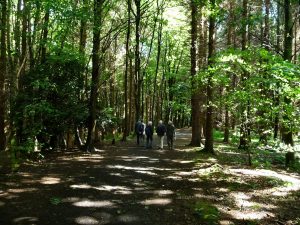
Last Tuesday, on a lovely August morning, eight of our ‘Probus’ members went on our monthly
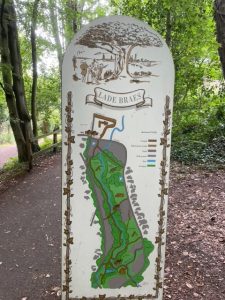
‘Walk’, this time to St. Andrews and a walk along the ‘Lade Braes Walk’. Seven of our Group,
met up at Kirkcaldy Railway Station at 9.30am to board the 9.39am train to Leuchars. Our
chief – Phil, – joined our train at Markinch. On reaching Leuchars at around 10.10am, we then
continued our journey by bus to St. Andrews, arriving at 10.30am, where we commenced our
walk along the aforementioned ‘Lade Braes’. Which is a lovely forested ‘Walk’ along the
Kinnes Burn. A pleasant amble along a well maintained pathway then proceeded, enjoying
the glorious woods which surrounded us along the way.
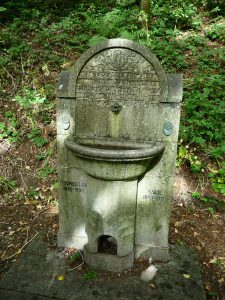
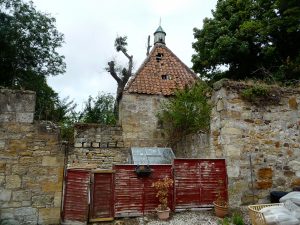
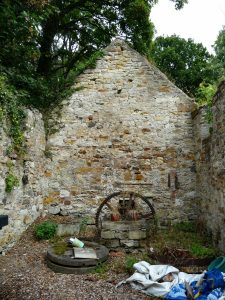
On reaching the ‘Old Law Mill’, incorporating it’s ancient water Wheel, it was decided to
return towards the town, by the same route. Given that we had walked for approx. 1½ hours
and 3.5 miles. It was time or some well-earned and deserved refreshments.
We then reached our predetermined refreshment stop ‘Molly Malone’s Pub’, in the town at
12.10pm, where we were expecting some light lunch. Unfortunately, this was not to be the
case, as given the Menu – only Pizzas were on offer, as they had no operational kitchen !!!!.
We then exited abruptly and headed to ‘ The Rector’s Café ’, which was virtually across the
road, where we all enjoyed a light and in-expensive snack and drinks.
After our lunch break, it was time to return to the bus station, where we were fortunate
enough to immediately board the bus to Leuchars and the train back to Markinch / Kirkcaldy,
arriving back at approx. 2.30pm.
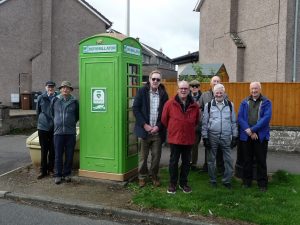
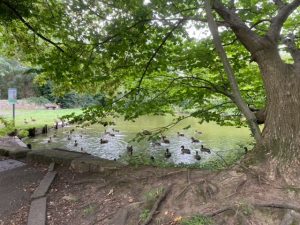
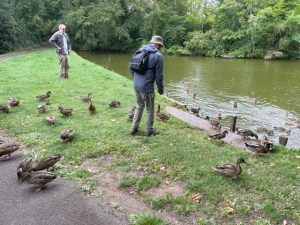
Hopefully, the photographs, which were shown on the screen and also on the Web Site, will
provide some of the views, which we appreciated during our ‘Walk’.
Again I would repeat my invitation for you to Join us and get some exercise on our future ‘
Walks ’. details of which, you never know, you may learn some interesting facts about the
locations along with that of your fellow members. !!!!!!
The details of our next ‘Walk’ which will be next Tuesday 8th Sept. (Note earlier than usual
due to Holiday priorities) are :-
Destination :- Cupar, Riverside East / Tarvit Pond / Tarvit Farm.
Meeting Point :- Kirkcaldy Railway Station.
Transport :- 9.39am Train from Kirkcaldy – 9.48am from Markinch.
Distance :- 3.5 Miles.
Terrain :- Mostly favourably good but slight hill near the end.
Refreshments :- Fisher & Donaldson’s Café.
Return :- 12.59am train from Cupar to Kirkcaldy, Via Markinch.
I should just say that it may be possible to purchase Strawberries at Tarvit Farm but CAUTION,
you do need cash and a bag with no change being issued.
SPEAKER
The speaker was introduced by Jack Lowther and was Anna Tizzard on “Highs and lows of a
Paralympic Athlete”. Anna is a three times Para-Olympian who was born in Southampton and
moved to Scotland in 1989
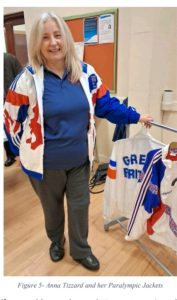
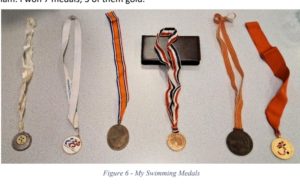
Figure 5- Anna Tizzard and her Paralympic Jackets
Anna introduced herself as an athlete and a coach. In sports sessions they always have a warm
up so she asked all the members present to stand up, stretch their arms to their sides, bend
their elbows and index fingers into their ears, wiggle their ears and have their ears open to
listen to this presentation!
The Paralympic Games were started in 1939 by Sir Ludwig Guttmann, a German-British
neurologist who created a sports competition for World War II veterans with spinal cord
injuries. The British Government asked him to support and provide hospital support for the
injured which was setup at Stoke Mandeville hospital.
In 1948 the Olympics were held in London and Ludwig Guttmann said we should have a
disability version of the Olympics. So in 1948 at Stoke Mandeville, 16 athletes (patients in the
hospital) competed in the first Paralympic Games at the single sport of archery.
1952 was the first year when the games became international when 4 Dutch war veterans
came to the hospital and competed alongside British athletes.
The games really took off in the 1960s and 70s. In Rome in 1960 the games became truly
international when 400 athletes from 23 countries competed. It has grown every Olympics
since.
How do we decide that competitions are fair and that competitors are of a similar ability to
each other? We use a classification system to ensure equal disabilities. This comprises a bench test to test our functional ability and then we are observed performing the sport we plan tocomplete in. This results in a category being allocated to the athlete for that sport. If peopleare visually impaired, for example a swimmer competing in the blind category, then their
goggles will be blacked out and checked before they enter and exit the water to ensure no
cheating.
It was in the 1970s that people with disabilities other than spinal cord injuries began to
actually be included within the Paralympic movement.
At the London 2012 Olympics the Paralympics events had 4,200 competitors from 160
countries taking part in 20 sports.
My journey with the Paralympics began when I was aged 3 and contracted Polio in 1973.The consultant told my parents that they needed to get Anna swimming. So I went along to my local disabled swimming club, Southampton Penguins Swimming Club, and that was where Istarted my swimming.
My first competition was at age 4 in a swimming event where I won a bronze medal – as soon
as the medal was placed on my neck I knew this was the sport for me. I began to love swimming and would do it every week.
At the age of 11 I went to my first British Junior Swimming Championships. I thought I waspretty good when I arrived but was totally stuffed by the opposition who were aged around17. I came back with my tail between my legs and told my parents I needed to be better.
I then joined Southampton Swimming Club, a mainstream club, started swimming more and got a great coach called Tony Carey who was fantastic and gave me so much confidence. He coached me from 5am – 7am in the morning four days a week before school.
In the mid-1980s I met a Paralympic swimmer for the first time, Trevor French. He had competed in Rome and seemed really old to me at the time. He told me about the Paralympic Games and that just ignited that seed of what was possible if I trained harder. It was Trevor
that gave me the enthusiasm and determination to be a better swimmer.
In 1986 I went to my first international competition, the World Youth Championships in
Nottingham. I won 7 medals, 3 of them gold.
I was then selected for the world championships, where my first senior completion was in Paris. I stood against senior athletes, huge muscley people from all over the world. I stood onthe block and I remember being totally terrified and psyched out.
Before you go in to your competition you are held in a call up room. This was very intimidating for a 16 year old at her first senior swimming championship. I had athletes targeting me and stretching out right in front of me. This totally worked resulting in me not winning any medals.
I needed to find a way to improve myself so I could compete better against the other athletes.
I then attended the Seoul Paralympics in South Korea where we had our own opening
ceremony and used the same venues as the Olympic swimmers. The Koreans didn’t really know what to do with disabled athletes and worried about a fire in the athletes village. What they did was add a ramp around the building to aid evacuation in case of an emergency.
Unfortunately wheel chair users were at the top so would be speeding down and shooting off the end knocking everyone over as they passed!
Due to distance from the UK there were not many spectators from home. However, the Koreans hired an organisation to support each country. Ours was a Church who would shout ‘G’ and ‘B’ as they hit wooden blocks of wood. They also rented a crowd, for example pupils from a school, to increase the numbers. As you walked around you would be surrounded by kids from these schools – I was even asked for my autograph for the first time.
Although itwas great to participate I have my regrets over my performance. Due to my short fingernails, two athletes before me had a dead heat so both won bronze and I got 5th place. I relive that race many time and sadly the result is always the same.
Two years later at the World Championships I won a gold medal along with a world record. It was lovely to be on the podium and experience the national anthem and enjoy success with the camaraderie of my teammates.
Next was the Barcelona Olympics in 1992 and I went there feeling really confident but I picked up an injury so did not perform well. The crowds were fantastic as the tickets were sold cheaply so for the first time we had crowds that wanted to see us compete. In the Olympic swimming pool 10,000 people were watching us. The noise when a Spanish competitor was announced was amazing and really intimidating. This games introduced technology such as instant results and positive dope testing with some people being banned. Also, a real massive village with cinemas, hairdressers, bowling alleys and quiet and games rooms. Things that were never seen before at a Paralympics – it was exactly the same as the Olympics. Back home, we used to have training events with the non-disabled teams and I was once asked how I got into the water. I said I dived just like other athletes. That is where I realised that they were on a massive learning curve about disability sport. It wasn’t until they saw me in the water that they recognised me as an elite athlete and worthy of my place on the team. The Commonwealth Games in 1994 was the first time paralympic athletes were fully included. This was in Canada where a small number of events were allocated to people with disabilities. Although my best event, back stroke, was not available I was able to compete at the front crawl.
At the Atlanta Olympics in 1996 there was an outstanding Dutch swimmer, my nemesis, who could beat us all. Earlier, at the preceding World Championships I took her to lunch to find out her secrets. She told me it was all due to mental preparation. I bought a cassette player and tape where I could fall asleep listening to a voice taking me through my event. We also began to bring in weight training and strength conditioning including cross-training with circuits and basketball. So I had a programme that I pulled together as shown below:
I had to plan all this sport around my school, college or work. Funding was from my work or from the Bank of Mum and Dad. Nowadays we are National Lottery funded.
Back at Atlanta, we had a holding camp at Pensacola to acclimatise, for the first time ever. It was a 6 hour trip to Atlanta and when we arrived we found the Americans were not interested in the Paralympics and had sold off the equipment and facilities in the athletes village. We even had two athletes sharing a bedroom – not good if they both have wheel chairs. The food was just burgers with a Pizza takeaway outside the village which did a roaring trade. Let’s hope for better treatment at the next L.A. Paralympic Games. There were huge queues for food and no entertainment so we started playing cards. The spectators were mostly familymembers as the ticket prices were quite high. I was not a first pick for the team as two
swimmers were better than me. Due to my mental preparation I did make it onto the team
and was very grateful – I knew it would be my last international event. What happened was I
went to the blocks and started getting ready. However I could not get my shoelace undone
but I did not panic due to my mental preparation and eventually was ready. After entering
the water the race started but when I pushed off the wall my goggles came off. I came 9th
where only the first 8 went forward. Luckily the Swede was disqualified so I got in. I then
swam the 100m back stroke in a personal best time but it was not enough to get a medal. I
have never achieved this time since and still cant believe I managed it!
Many people have helped me in my journey to the Paralympic Games including Disability
Sport Fife, based at the Michael Woods Sports and Leisure Centre in Glenrothes. I also want
to thank you for your donation today to Disability Sport Fife.
Anna then asked the members to perform the cool down which comprised a round of
applause for Anna’s talk!
Questions
Many disabilities need drugs to manage them, how do you ensure you don’t break the drug
rules? I am an asthmatic and use an inhaler which was on the banned list so I had to have a
note from my GP to state that these medications are required for me to stay alive put onto
my record. You have to be very careful as things like Night Nurse are on the banned list. All
athletes are fully versed on what you should and shouldn’t do so anyone who fails a dope test
will have made their own decision to take any banned substance. In the 1980s some people
taking part in athletics and weight lifting with spinal issues were ‘boosting’ which involved
breaking a bone, i.e. a toe, which they would not feel but would give a natural surge of
adrenalin in the body giving them an advantage. Testing was improved to catch such cheating.
Sadly some people still try to cheat.
Did you ever have any doubts that swimming was for you as it impacted your lifestyle? When
I was a teenager I missed going out with my friends as I was always swimming before and
after school. Although it’s a treadmill I was committed to the sport and wanted to reach the
Paralympics, and of course there were always younger simmers coming up behind me to take
my place. It was difficult with early starts and long hours and that had an impact on my
parents who took me to the swimming pool. Sometimes I could hear my dad snoring in the
stands as I swam.
The Vote of Thanks was given by Cap Fowles who spoke of the wet journey we have had.
Starting at age of 4, attending world events despite being terrified, seeing crowds increase at
every event (despite the lack of recognition in America) she has had an excellent sporting
career – despite not having longer fingernails and the goggle mishap. I’m still recovering from
the initial warm up so please show your appreciation to Anna for this incredible tale of what
the human spirit can do when it makes it mind up.
Next Meeting
Date: 15th September 2026
Speaker: Gordon Stewart
Topic: “International Fire and Rescue”
Vote of Thanks: John Chalmers
AOCB:
The next Committee meeting will be held in Pathhead Church Hall on 21st October at 10am.
The next meeting of the 1000th team will be at Bob Terras’s house on Wednesday 9th
September. Everything is coming together well and the agenda is being planned. It’s looking
like it will be a very exciting day.
The meeting closed at 11:29hrs.
Allan Morton
Secretary
USEFUL LINKS AND CALENDAR
Website: probusonline.org/raith-of-kirkcaldy/
Facebook: facebook.com/RaithProbusClub
Calendar: calendar.google.com/calendar …
Secretary Email: RaithProbusSec@gmail.com
3 Amigos Cruising
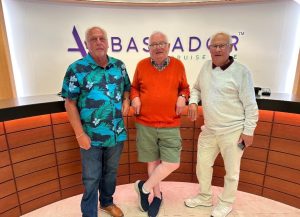
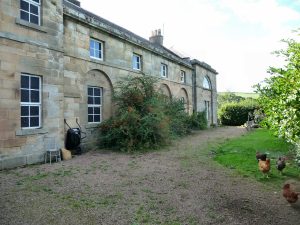
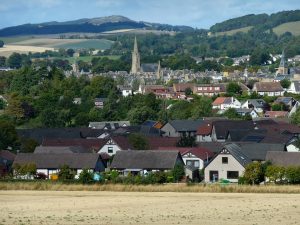
Sept 2026 Cupar, Riverside East / Tarvit Pond / Tarvit Farm.Walk
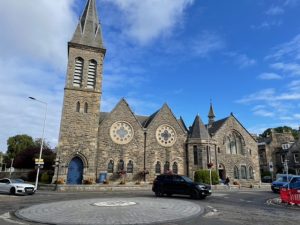
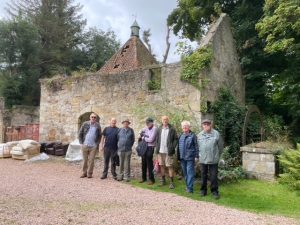
25th August Lade Braes St Andrews
18th August 2026 Curry Club
Falkland Walk
Bill Brown Dumfries Gardens
2017 2026